Trust Form Manufacturing for Your Custom Injection-Molded Badging Needs.
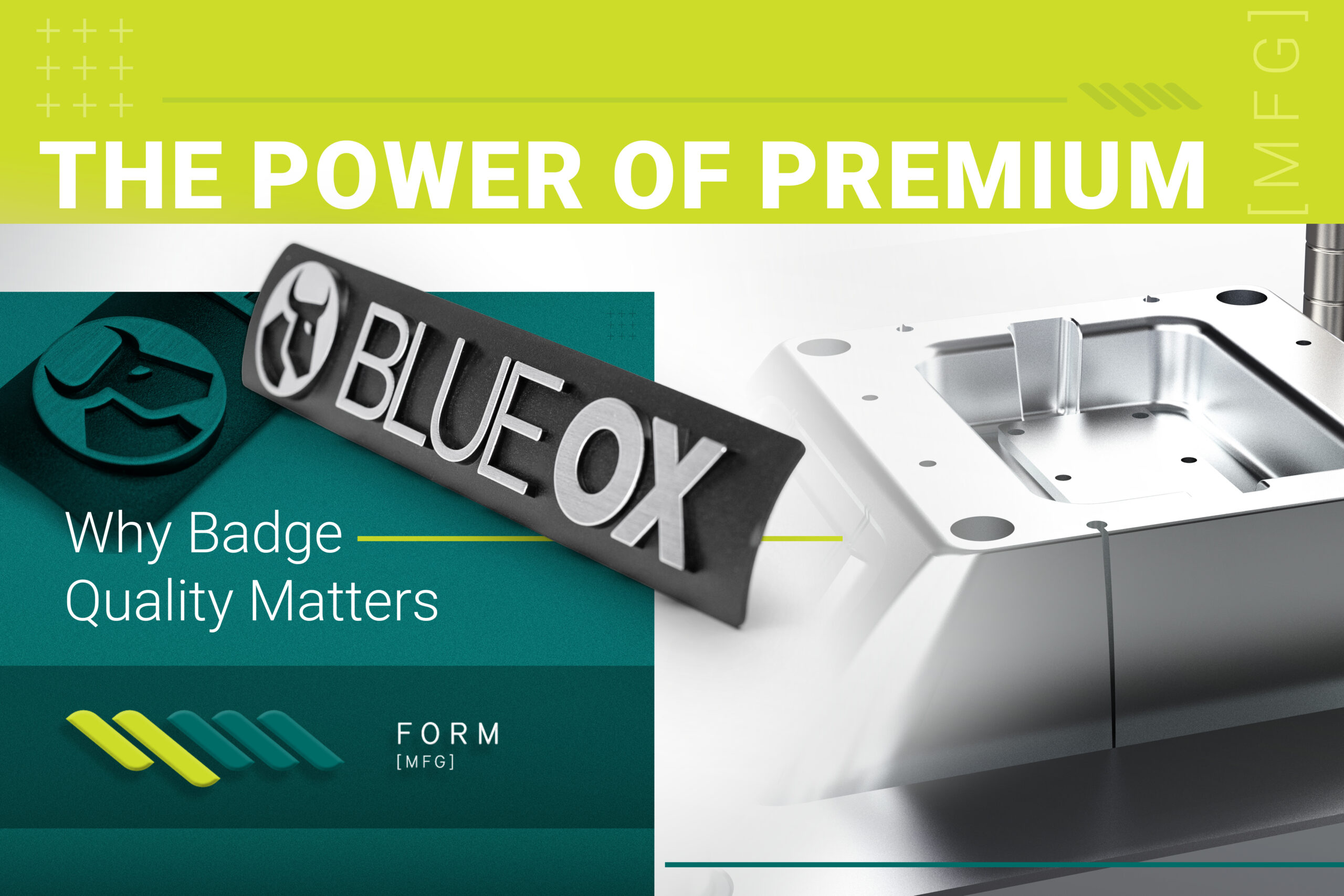
Walk through a car dealership lot or an appliance store showroom and one detail consistently commands attention: the badge. A badge is a 3D visual identifier and decorative element found on many products, featuring the company’s logo, text, and/or emblem — a symbolic design used to represent the brand in the minds of consumers.
A badge may only span a few inches, but it carries the full weight of a brand’s identity. Whether mounted to the grille of a vehicle, affixed to the door of a refrigerator, or embedded into a piece of equipment, a badge is a popular and powerful way for brands to showcase themselves in a professional and eye-catching manner.
While a badge might seem minor compared to a product’s other parts, the quality of the badge plays a critical role in shaping perception. The difference between a premium badge and a lower-quality alternative is not subtle — it is felt, seen, and remembered.
Making a Lasting First Impression
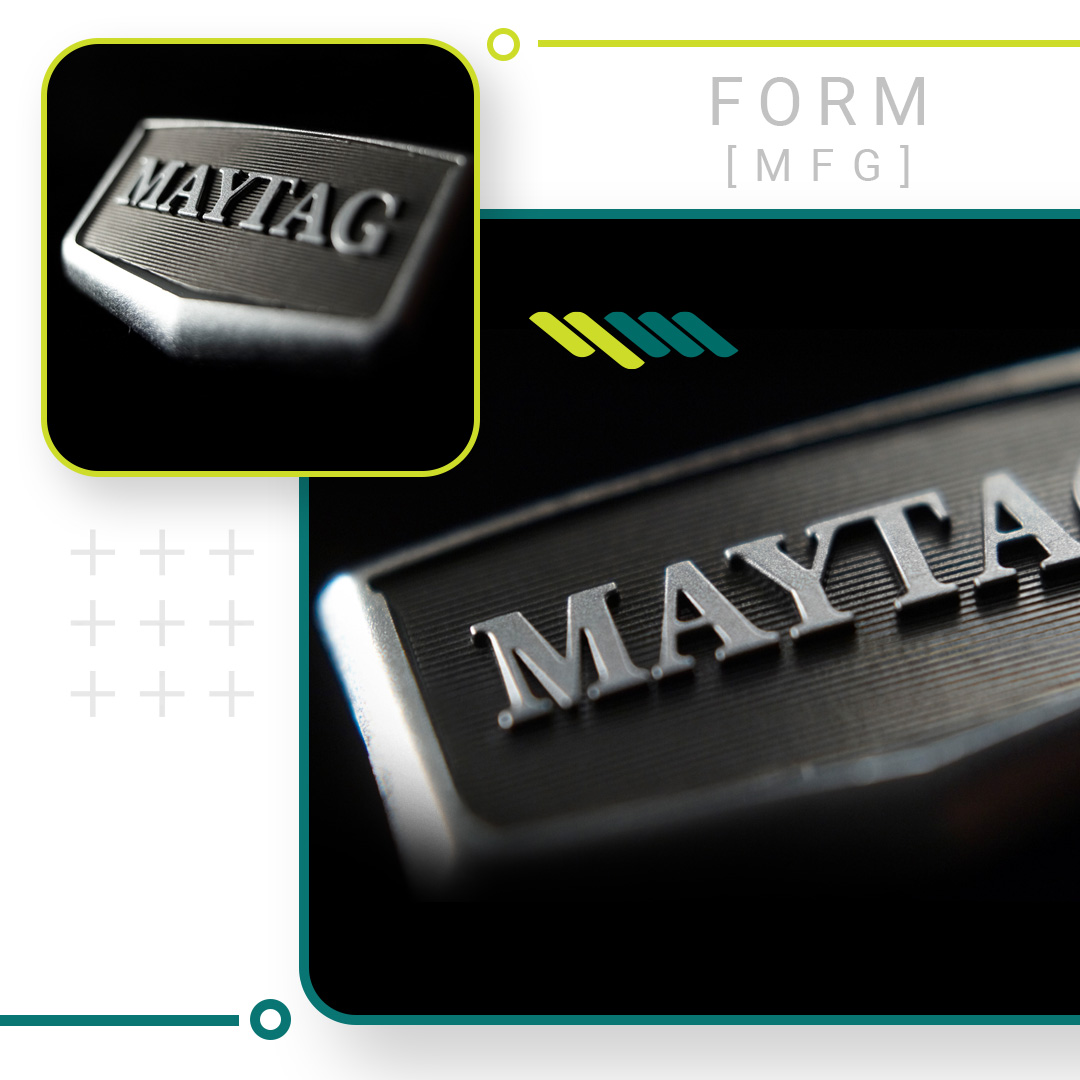
Consumers form opinions in seconds, and a badge functions as a visual shorthand for quality. Crisp edges, dimensional depth, reflective finishes, and balanced weight immediately communicate care and craftsmanship throughout the product.
On the other hand, one with uneven plating or soft detail can quietly undermine a product’s positioning. Even if the rest of the product performs well, a cheap-looking badge introduces doubt. If the visible detail looks compromised, customers may assume unseen components were treated the same way. That split-second perception can influence buying decisions more than brands often realize.
Processes Make a Big Difference
When people think about premium badges and emblems, they often picture die-cast metal or machined components. But injection molding has come to play a critical, more cost-effective role in the quality of many modern badges — especially in automotive, appliance, electronics, and equipment applications.
Injection molding is a high-volume manufacturing process used to produce plastic parts by injecting molten material into a metal mold, where it cools, solidifies, and is ejected. Paired with premium finishing touches, such as chrome plating and hot foil stamping, injection molding produces high-quality badges by delivering precise detail, dimensional consistency, and repeatable accuracy at scale.
When paired with high-grade resins and well-engineered tooling, it creates a smooth, stable foundation for premium finishes like chrome plating or painted metallic coatings. The process also allows integrated mounting features and structural reinforcement, improving durability and long-term adhesion. When executed properly, injection-molded badges can achieve a refined, long-lasting appearance that fully supports a premium brand image.
A Reflection of Your Brand Value
In the consumer world, the badge is more than identification; it is a symbol of promise. Consider the three-pointed star of Mercedes-Benz or the roundel of BMW. These marks represent decades of engineering refinement, performance standards, and global reputation. The badge must physically embody that legacy. A peeling or faded emblem would contradict the very qualities those brands promote.
Because the emblem serves as the public face of the company, its quality directly reflects brand standards. Every finish layer, every beveled edge, and every adhesive decision becomes part of the brand story. For companies that compete on excellence, there is little room for inconsistency. When executed at the high level that Form Manufacturing offers, the badge reinforces confidence. Meanwhile, a poorly crafted badge introduces inconsistency.
Durability Reflects Commitment
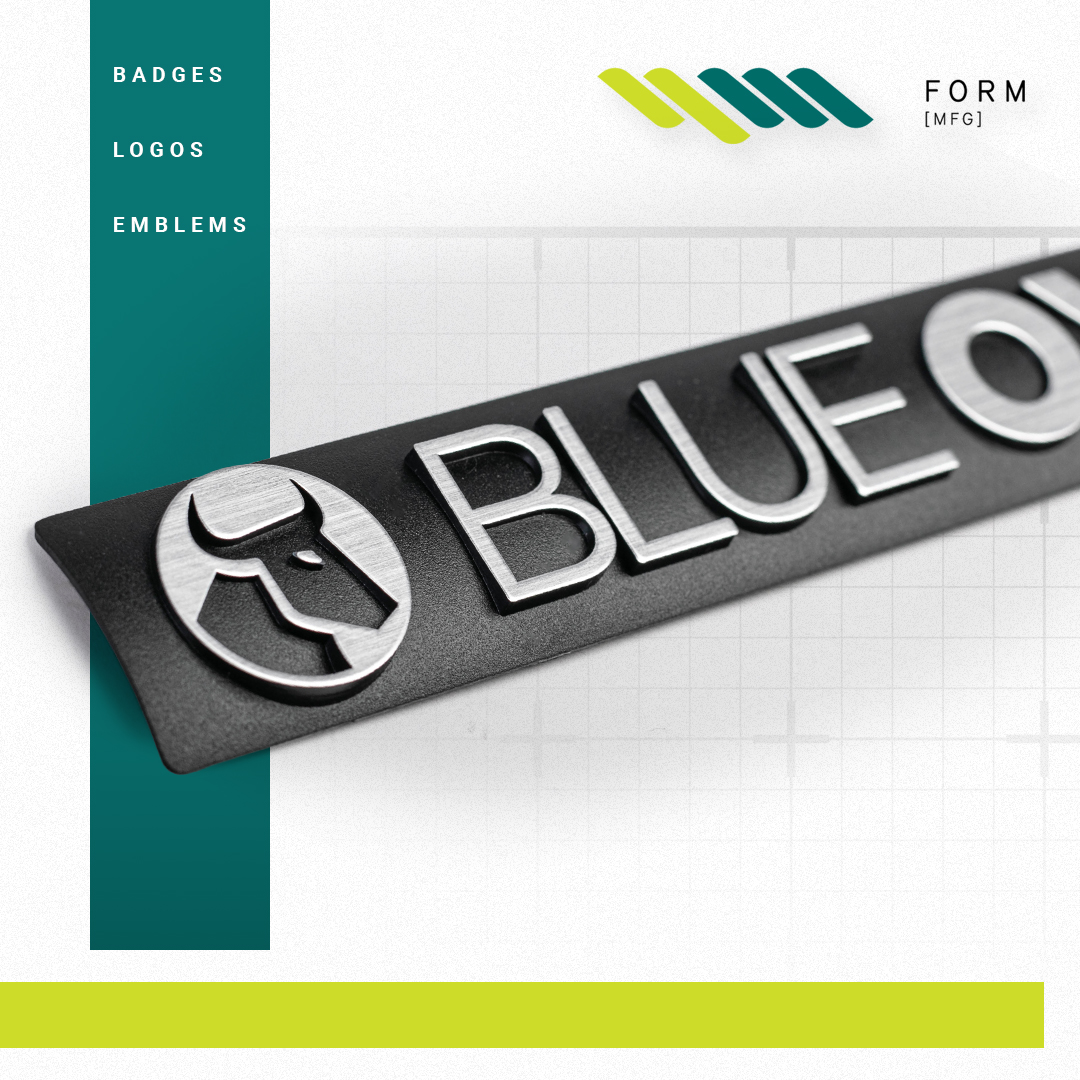
Premium badges are built with longevity in mind. High-quality coatings resist ultraviolet degradation. Corrosion-resistant materials like chrome maintain their appearance over years of exposure. Industrial-grade adhesives prevent lifting and separation even in fluctuating temperatures.
Lower-tier emblems often reveal their limitations within a relatively short period. Edges may curl. Finishes may flake. Colors may fade unevenly. Once deterioration begins, it rarely improves. Instead, it gradually detracts from the overall product aesthetic. For manufacturers, these failures can lead to warranty claims, replacements, or reputational damage. For consumers, they become visible reminders of perceived shortcuts.
The Psychology of Detail
Consumers rarely dissect material specifications, but they instinctively evaluate details. When a badge feels cool and solid to the touch, when lettering is sharply defined, and when finishes reflect light evenly, it reinforces the perception of quality across the entire product.
This psychological effect is powerful. If visible components are executed with care, buyers assume hidden systems are equally well engineered. Conversely, if the most visible branding element appears compromised, doubts can extend to internal performance. In competitive markets such as automotive, appliances, electronics, and industrial equipment, those impressions can shape brand loyalty and resale value.
Cost Versus Long-Term Value
More-premium badges may require greater investment in tooling, materials, and finishing processes. However, the incremental cost often represents a small fraction of the total product price. When evaluated against long-term brand equity, durability, and customer satisfaction, that investment can yield significant returns. Quality processes like injection molding make the perfect balance between high quality and cost-effectiveness.
A well-crafted badge contributes to showroom appeal, reinforces premium pricing, and withstands years of use without degradation. In contrast, a lower-cost emblem may save a few dollars at production but introduce perception issues that far outweigh the savings. For brands positioned as high-performance, luxury, or professional-grade, consistency in detail is essential. The badge must align with the promise.
Small Component With Major Impact
At first glance, a badge seems like a minor design element, but in reality, it serves as the public face of a product. It is photographed, touched, and displayed. It appears in marketing materials and lives on long after the initial purchase.
When crafted with premium processes, materials, precision and care, a badge becomes a symbol of durability and pride. When produced cheaply, it can signal cost-cutting and compromise. Consumers do not simply buy vehicles, appliances, or equipment. They buy confidence, reputation, and performance. And the badge is where that promise becomes tangible.
As an industry leader in custom injection-molded badges, logos, and emblems, Form Manufacturing is the manufacturing partner you can trust to elevate your products through the power of premium badges. Talk to us today about your unique badge needs and how we’ll work with you to bring your vision to life.